
At ICA Miami, the visionary Yanomami artist transforms ancestral knowledge, dreams and the living language of the rainforest into an extraordinary dialogue between contemporary art, spirituality and architecture. 2026
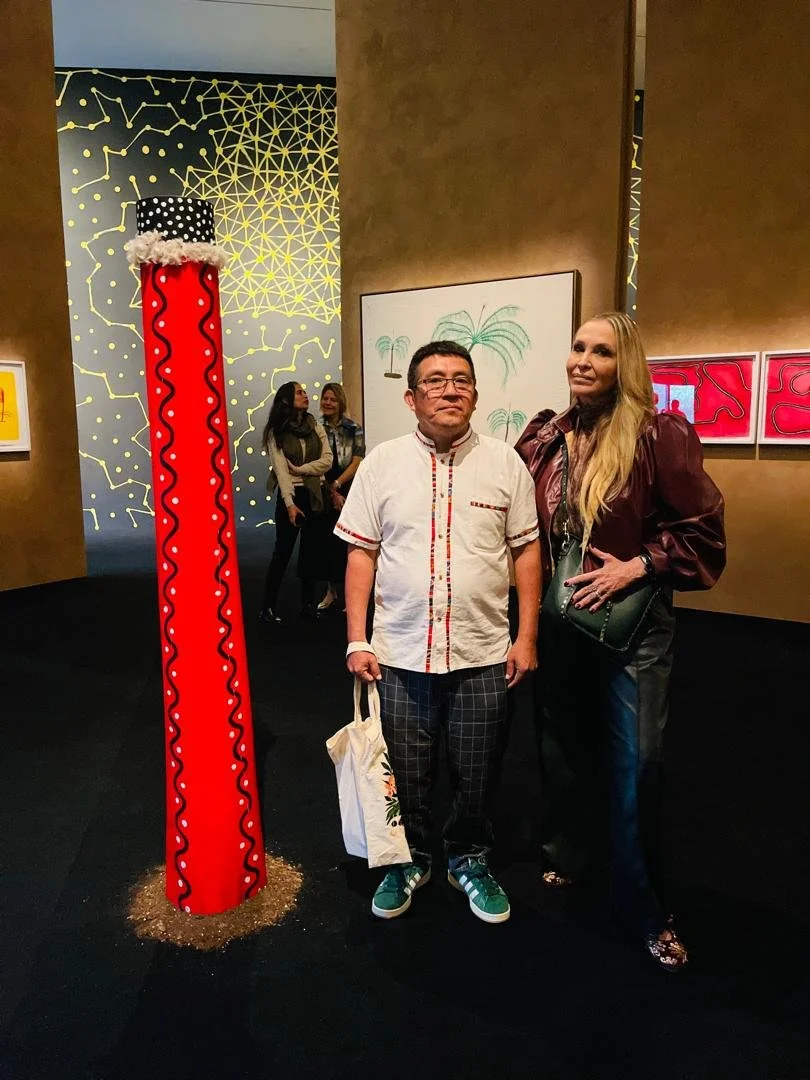
In an artistic landscape increasingly concerned with the relationship between humanity and the natural world, the arrival of Venezuelan Yanomami artist Sheroanawe Hakihiiwe at the Institute of Contemporary Art, Miami, represents a moment of exceptional cultural significance.
Presented in collaboration with the prestigious Fondation Cartier pour l’art contemporain, the exhibition brings together more than 100 works spanning three decades of artistic exploration. It is the artist’s first solo museum exhibition in the United States and an important recognition of a creative practice that transcends conventional distinctions between art, anthropology, spirituality and environmental consciousness.
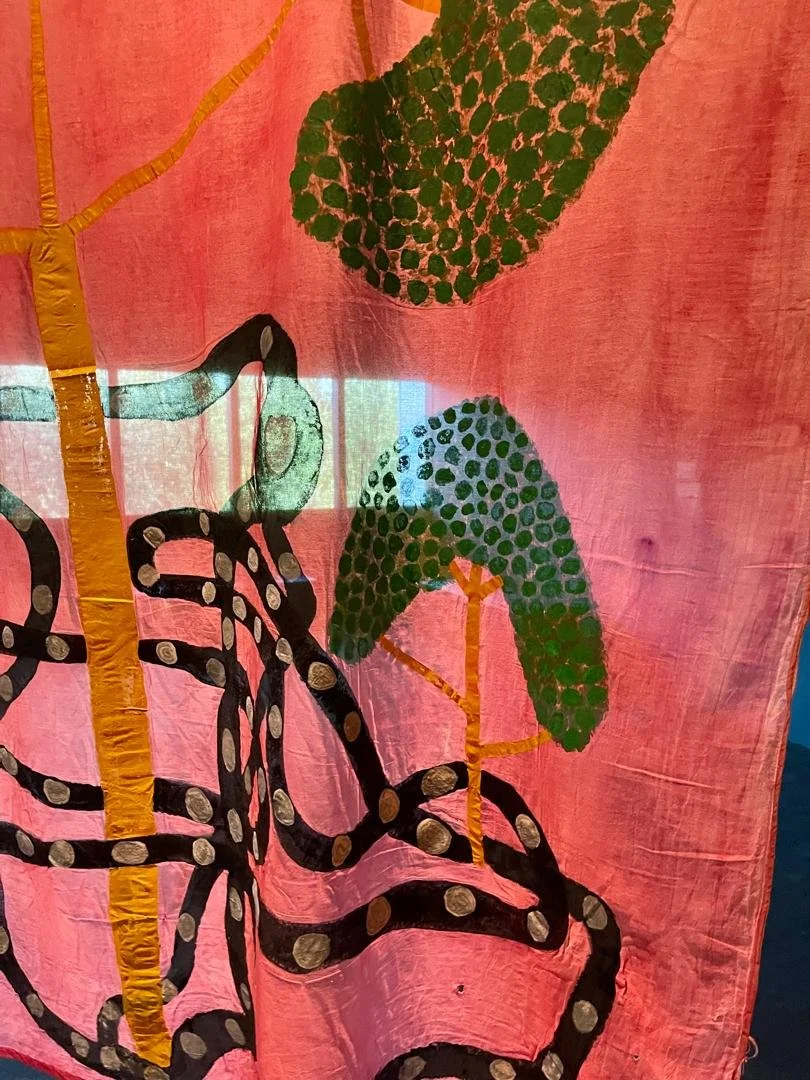
During the advance press presentation which I attended in Miami, the exhibition emerged as something considerably more profound than a retrospective. It is an invitation to discover another way of perceiving the world, one in which nature is not simply a landscape to contemplate but a living universe of knowledge, relationships, memory and invisible presences.
It was an exceptional privilege for me to experience this remarkable exhibition through a private guided visit with Sheroanawe Hakihiiwe himself, accompanied by Luis Romero Reveron his gallerist from ABRA Caracas. Moving through the exhibition in the artist’s company offered a rare and intimate perspective on his extraordinary universe. As he personally revealed the stories, symbolism, and ancestral knowledge woven into each work, the experience transcended the traditional encounter with art, becoming a profound journey into the spiritual and cultural heritage of the Yanomami people. A memorable moment in which art, memory, and the artist’s own voice came together with extraordinary authenticity.
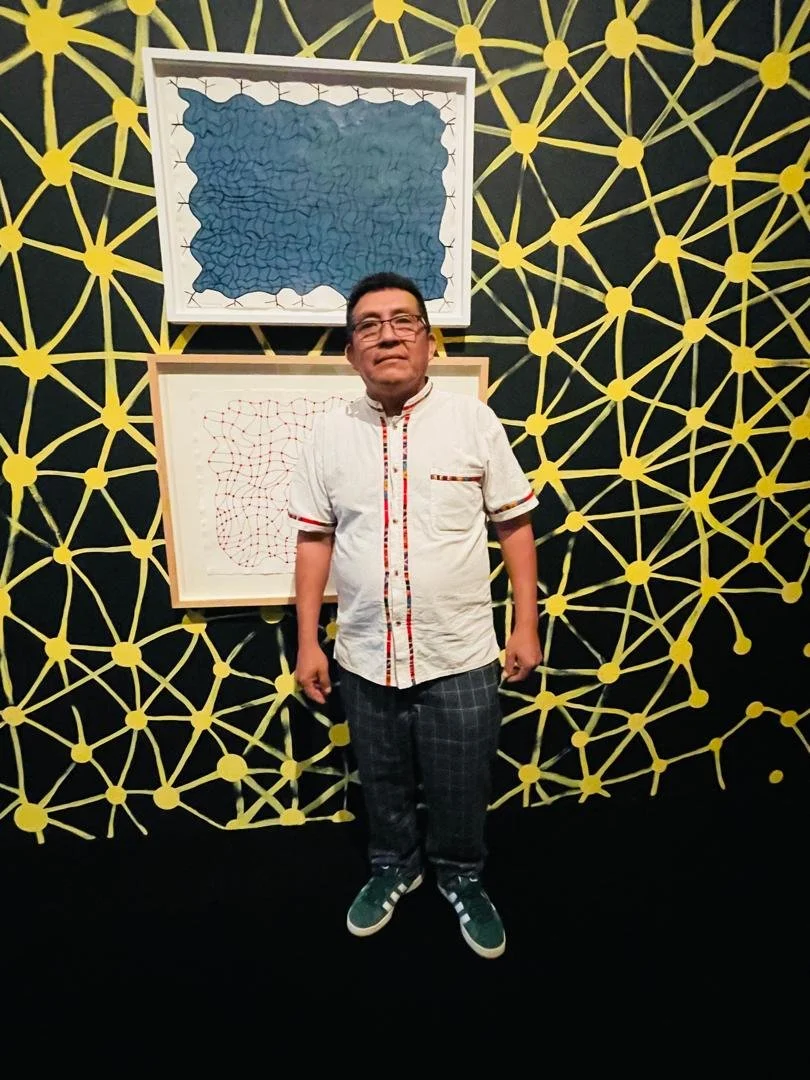
Born in 1971 in Sheroana, in the Venezuelan Amazon, Hakihiiwe belongs to the Yanomami people and lives in the Poripori community along the upper Orinoco River. His artistic universe is inseparable from the forest, its intricate botanical forms, its animals, its ancestral narratives and the spiritual traditions transmitted through generations.
The Forest as a Living Encyclopedia:
The origins of Hakihiiwe’s artistic practice date to the early 1990s, when his collaboration with Mexican artist Laura Anderson Barbata introduced him to the possibilities of handmade paper.
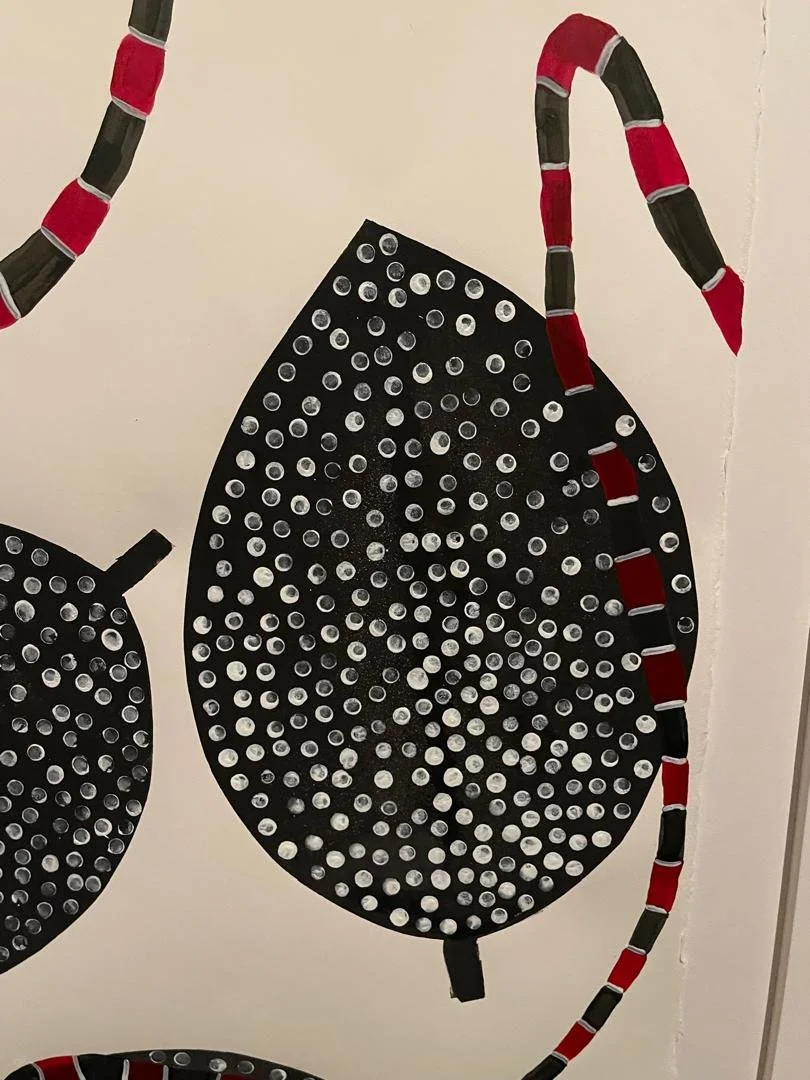
What began as an exploration of materials gradually evolved into a sophisticated artistic vocabulary rooted in Yanomami knowledge.
Leaves, feathers, animal tracks, insects, tree trunks and botanical structures appear throughout his compositions, often reduced to essential lines, rhythmic patterns and subtle arrangements of color.
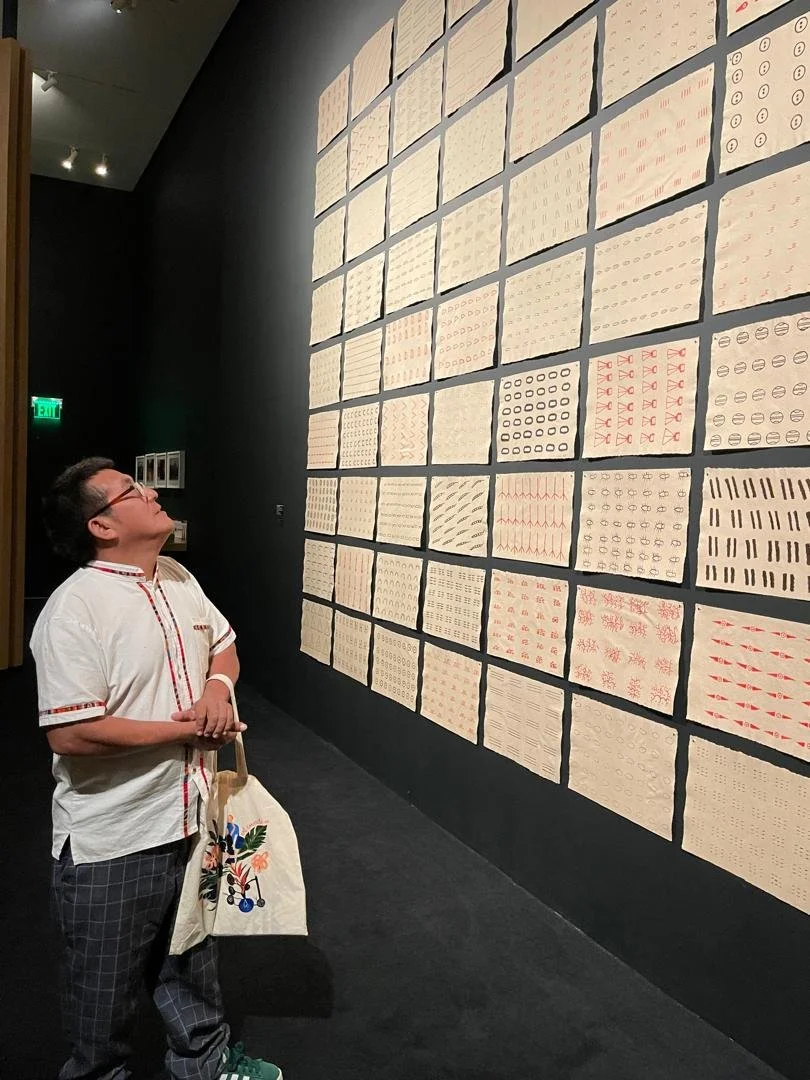
There is a remarkable economy of expression in these works. Their apparent simplicity conceals a profound understanding of the natural environment and an intimate familiarity with the symbolic significance of each form.
For Hakihiiwe, the act of drawing becomes an act of remembrance.
His ambitious Yanomami Encyclopedia:
an ongoing project developed in consultation with other shamans, seeks to preserve and transmit the cultural and ecological knowledge of his people.
In this sense, his artistic practice occupies a particularly meaningful position within contemporary art: it is simultaneously an aesthetic exploration and a living archive of ancestral wisdom.
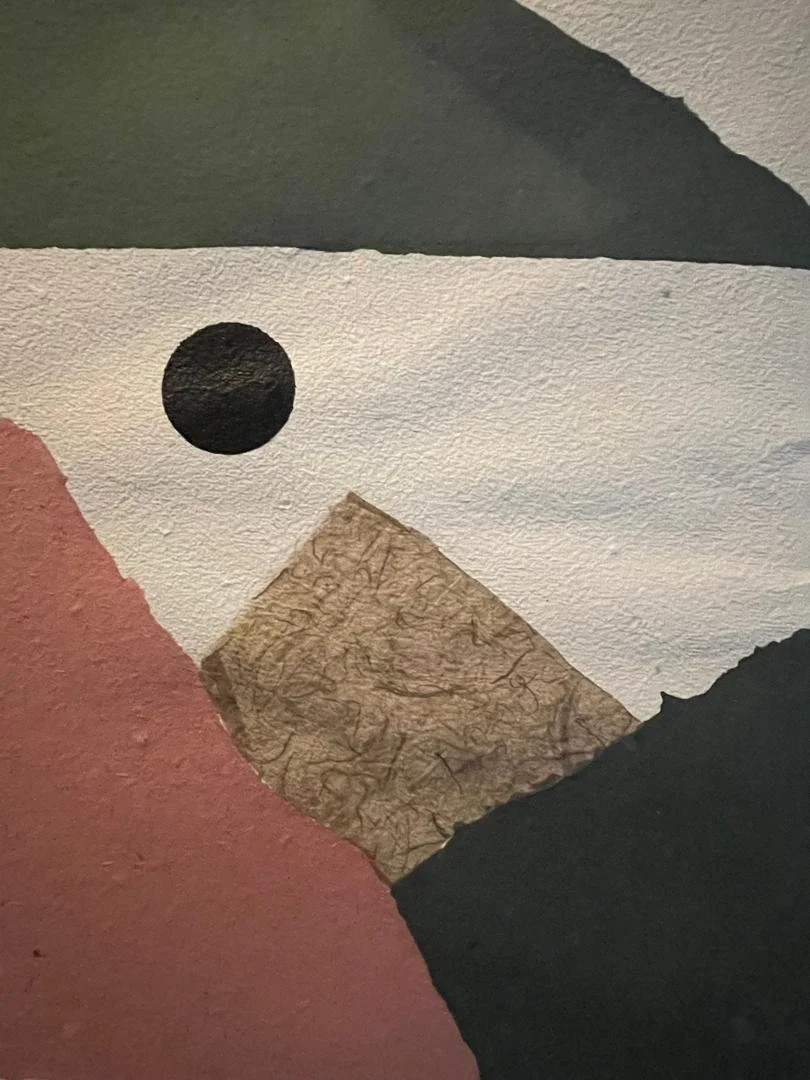
The Artist’s Voice: Dreams, Memory and the Invisible World
Central to understanding Hakihiiwe’s recent work is his initiation into shamanic practice, an experience that has expanded the spiritual and conceptual dimensions of his artistic language. This fascinating relationship between dreaming and creation is fundamental to his latest compositions.
Architecture as an Extension of the Artistic Experience
One of the most compelling aspects of the Miami exhibition is its architectural conception by the distinguished Mexican architect Mauricio Rocha Iturbide, founder of the Mexico City-based practice Taller de Arquitectura.
Rather than treating the exhibition galleries as neutral containers, Rocha has developed a spatial environment inspired by the shapono, the traditional communal dwelling of the Yanomami people.
The architectural proposal incorporates filtered light, natural earth pigments and a carefully considered relationship between the exhibition spaces and their surrounding environment.
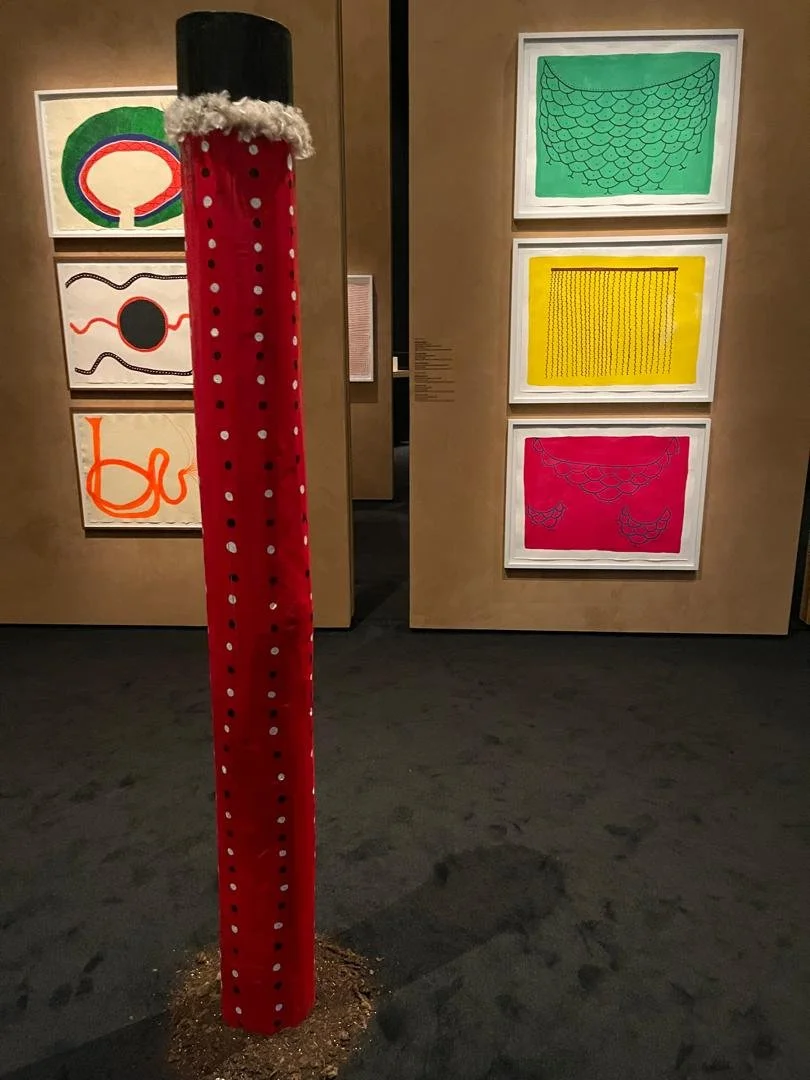
The architecture becomes an integral part of the curatorial narrative, establishing a subtle connection between the physical space of the museum and the cosmological universe represented in Hakihiiwe’s paintings.
From the Intimacy of Paper to Monumental Expression
The exhibition traces Hakihiiwe’s artistic evolution through four thematic chapters: Building a Language, Notational Systems and Encyclopedic Exercises, Landscapes, and Shamanic Initiation.
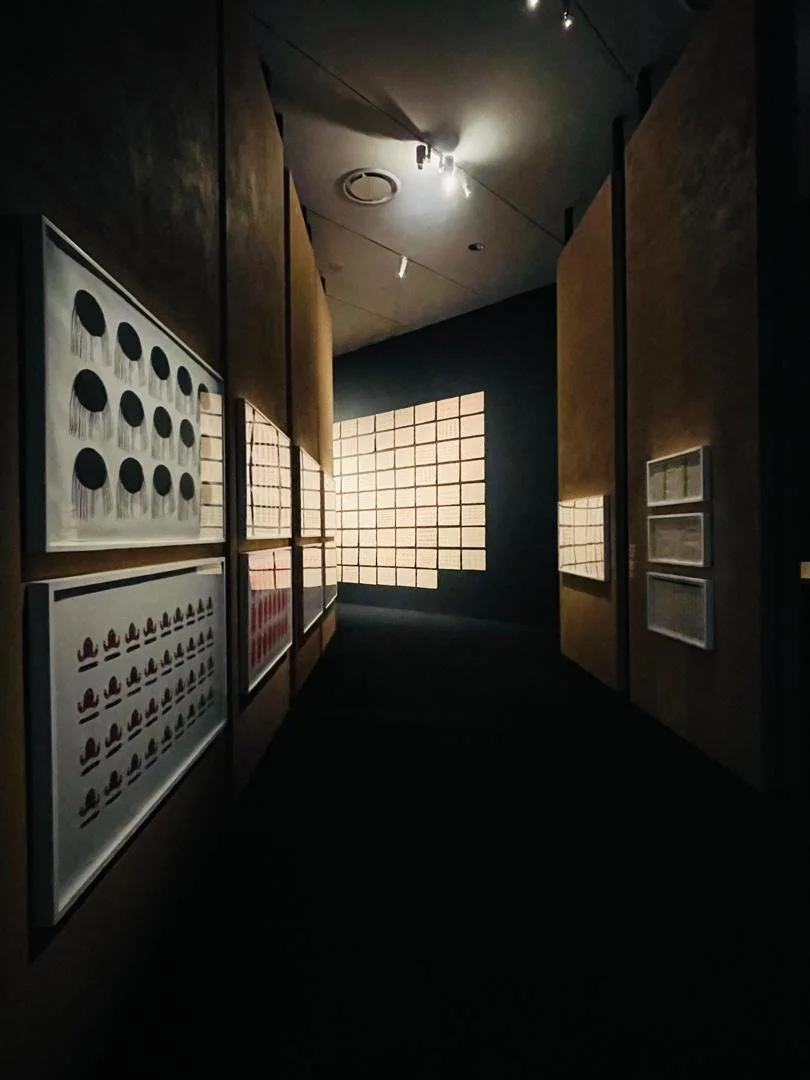
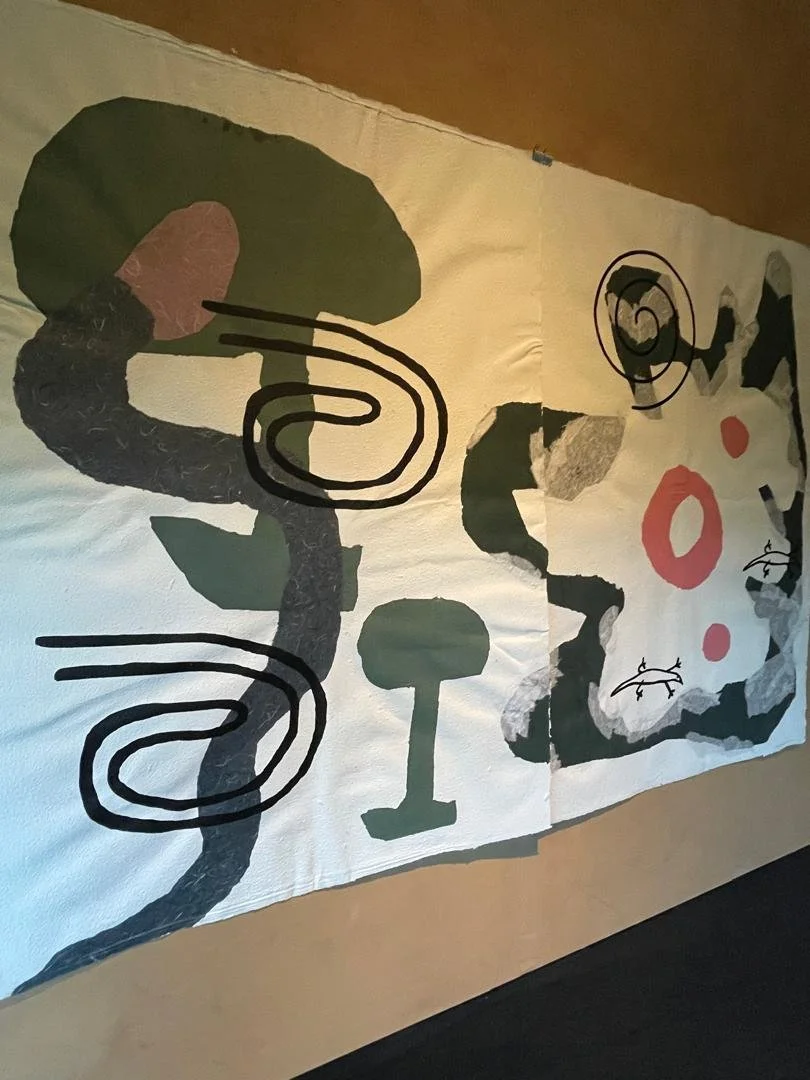
The exhibition also includes a monumental site-specific mural, an installation exploring shamanic materials, and the animated film Hekura peni ware puhi aupouhe (The Spirits Wash My Face, 2026).
The film offers a particularly intimate perspective on the relationship between dreams, spiritual experience and artistic creation.
Another important contribution is Agua de Espíritu, a documentary by filmmaker Juanita Onzaga, commissioned by the Fondation Cartier, which explores the artist’s spiritual world through his own voice and experiences.
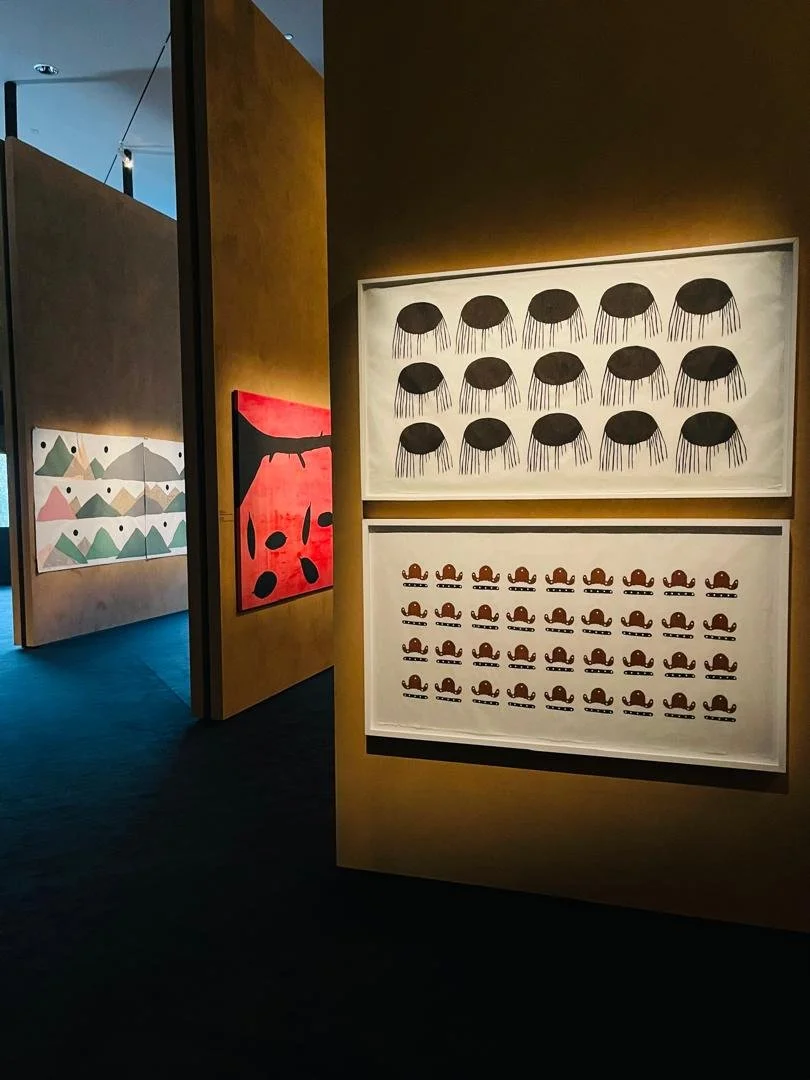
An extraordinary exhibition not to be missed. Sheroanawe Hakihiiwe at ICA Miami offers a rare journey into the poetic and spiritual universe of the Yanomami people, where ancestral wisdom and contemporary art converge. An extraordinary encounter with beauty, memory, and the profound connection between humanity and nature.
@titinapenzini