
BUS PALLADIUM: THE RETURN OF PARIS NIGHTS
By Titina Penzini and Louis Voltaire
Ever since Le Baron closed a few years ago, every time we returned to Paris, we felt that something was missing.
For us, Paris nightlife was never simply about parties or exclusive guest lists. It was about energy, spontaneity, encounters, music, creativity and a very specific tribe of people who transformed nights into unforgettable memories. Around André, Lionel, Greg and so many others, including artists and musicians who would later become internationally celebrated like Polo & Pan, a true creative family existed.
And somehow, we were part of that world.
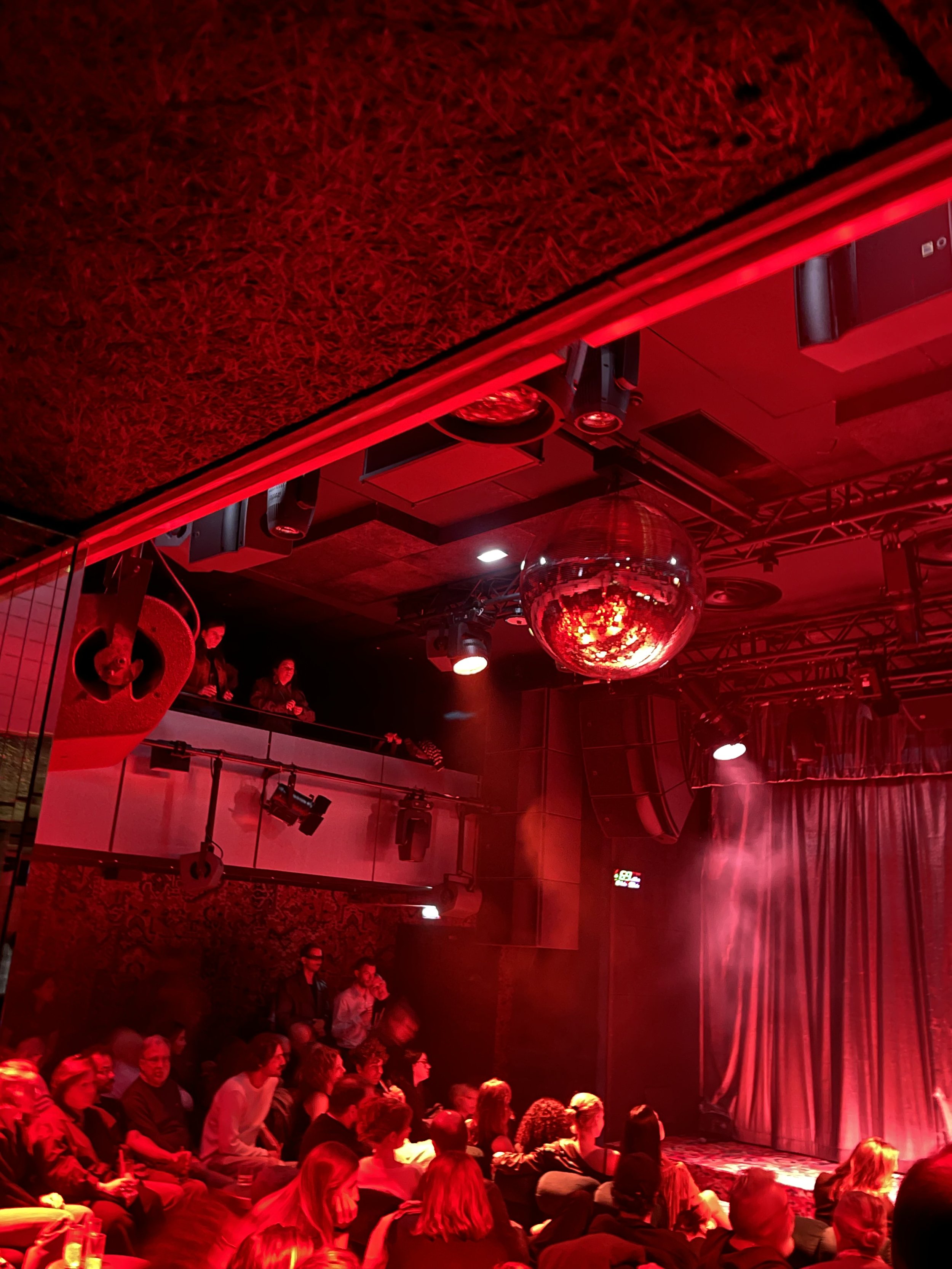
So when we heard during our latest stay in Paris that the legendary Bus Palladium was reopening in Pigalle, we immediately felt excited. Not nostalgic, excited. Especially when we learned that Lionel Bensemoun, Caroline de Maigret, Studio KO and chef Valentin Raffali were all involved in the rebirth of the project.
We instantly understood that this would not be another trendy hotel opening.
This was something much bigger.
To understand the Bus Palladium, one first has to understand Pigalle.
Located between South Pigalle, Rue des Martyrs and Montmartre in the 9th arrondissement, the neighborhood has always represented one of the most fascinating contradictions of Paris: sensual, artistic, decadent and deeply alive. Historically the city’s red light district, Pigalle mixed cabarets, sex shops, hidden cafés, music venues, tiny hotels and late night bars into a world unlike anywhere else.
Long before luxury hospitality rediscovered the area, creatives already gravitated there naturally.
Today, however, Pigalle is evolving into something even more interesting: a new cultural epicenter of Paris where fashion, art, nightlife, gastronomy and music collide naturally.
And the Bus Palladium may now be its beating heart.
As luck would have it, we were in Paris exactly during the official opening week of the Bus Palladium.
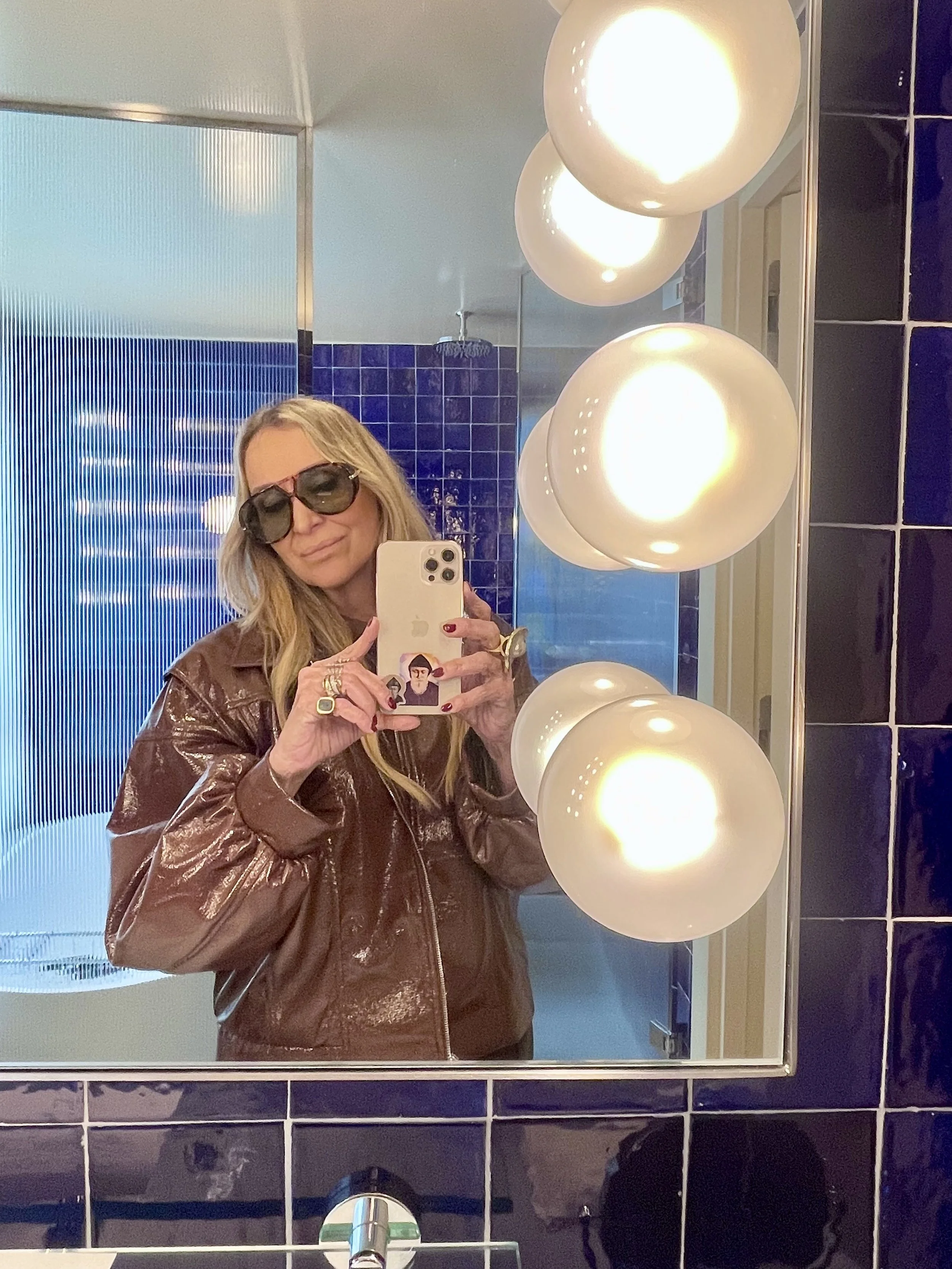
We checked in around 5 PM and immediately understood that the experience had been imagined as a complete universe rather than simply a hotel stay. The staff was elegant, warm and effortlessly cool, dressed under the stylistic direction overseen by Caroline de Maigret, whose touch could be felt everywhere: the atmosphere, the music, the details, the lighting, the rhythm of the place.
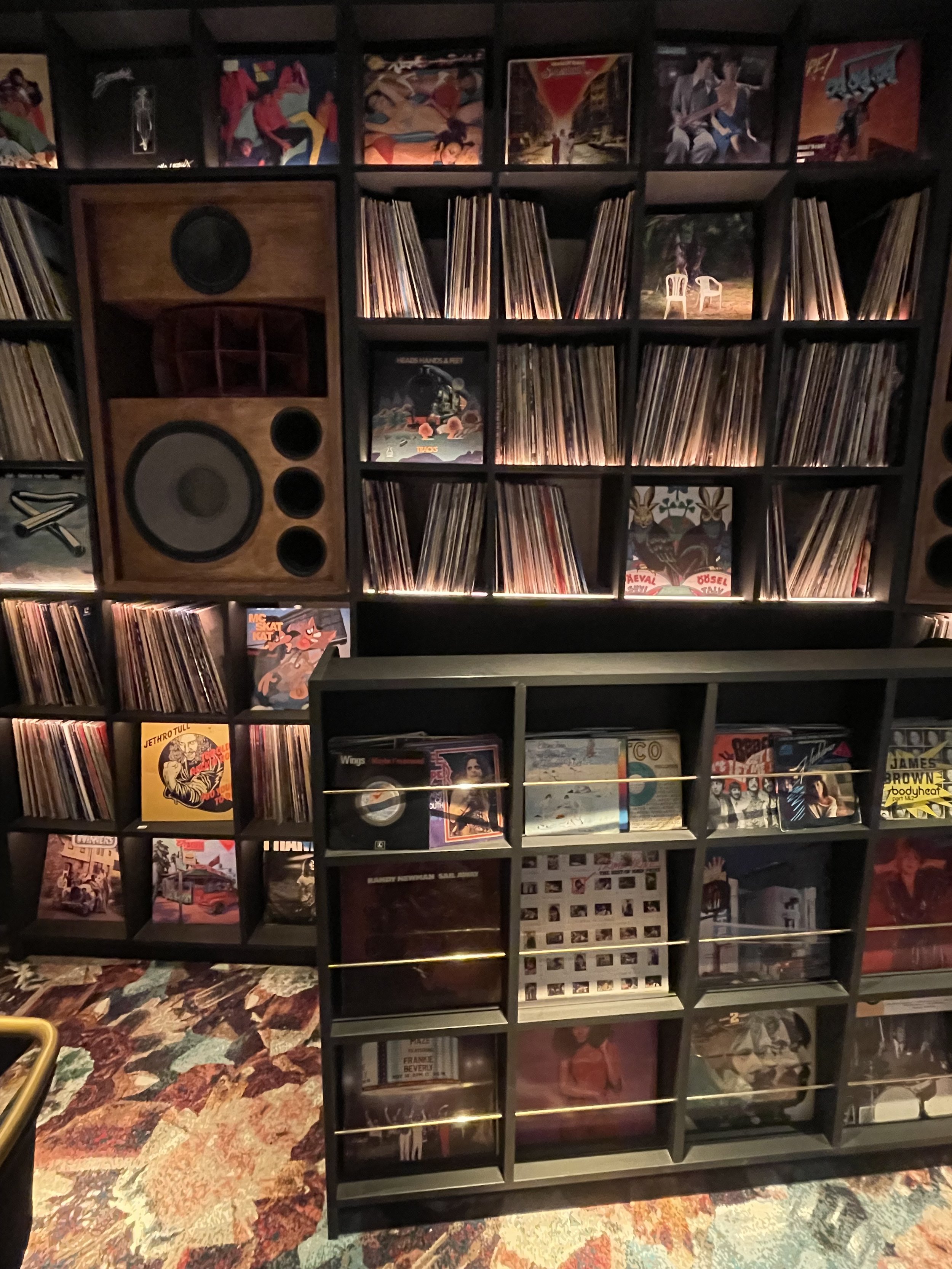
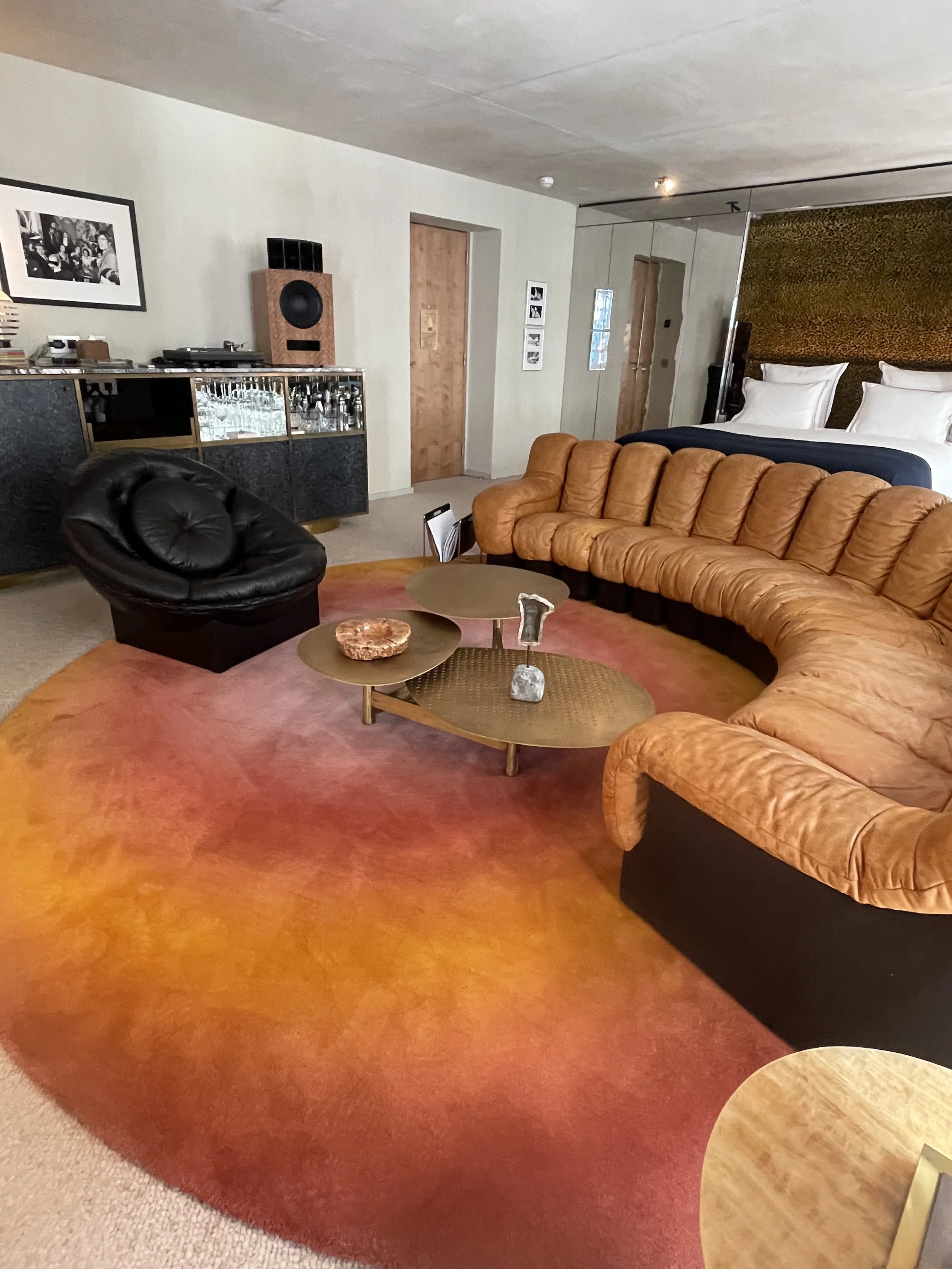
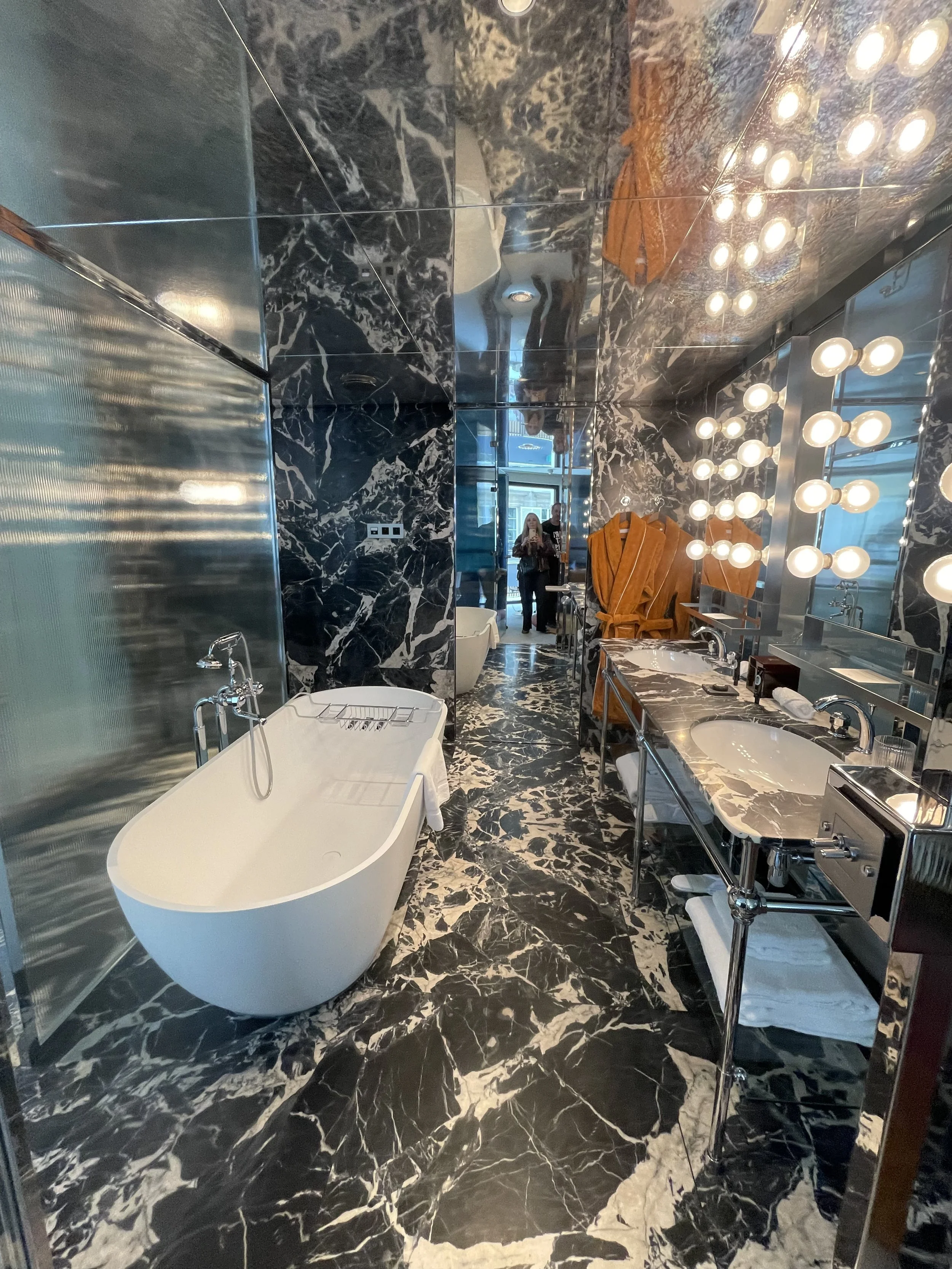
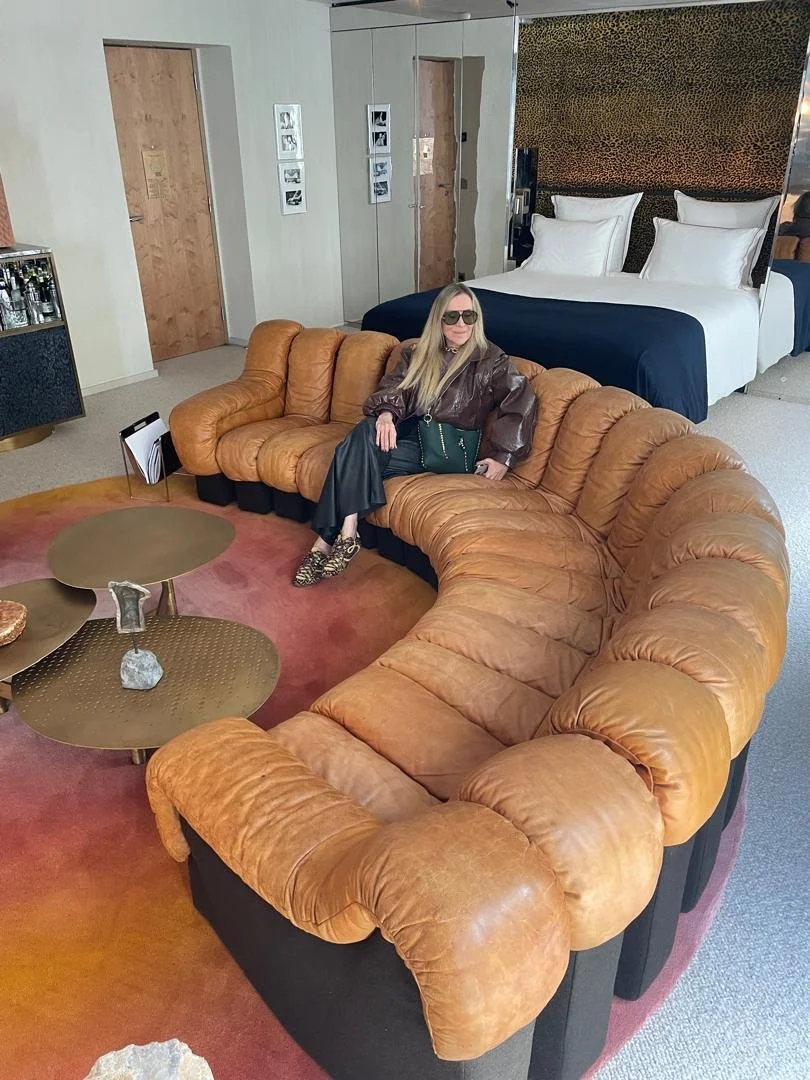
We were escorted to our beautiful suite and instantly felt transported into another world.
The rooms are spectacular, intimate, sensual and cinematic, with incredible bathrooms, sculptural design elements and analog sound systems playing curated playlists imagined specifically for the hotel. Everything felt immersive. You did not feel like a guest; you felt like you belonged there.
For a moment, we genuinely felt like rock stars.
After relaxing for a while, we went downstairs around 8:30 PM to meet Emiliana Valedon Penzini and Joao Amaral for dinner.
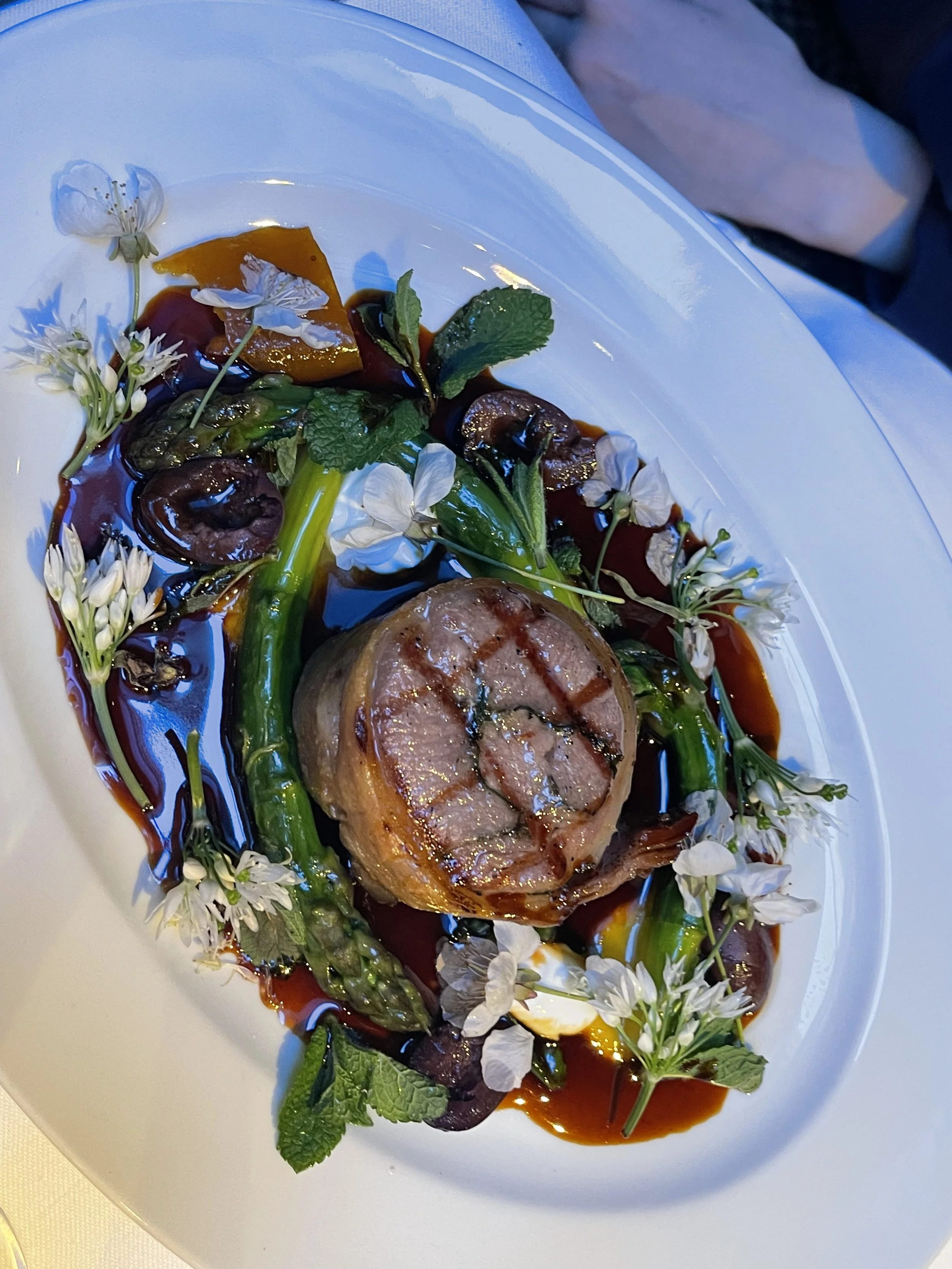
Chef Valentin Raffali has created a cuisine that is both sophisticated and playful, deeply creative without ever becoming pretentious.
But beyond the food, what impressed us most was the atmosphere of the dining room itself.
The architecture creates the sensation that every table occupies the best place in the room. At the center, a lush green installation evokes a hidden secret garden surrounded by candlelight, conversations and music. Everyone becomes part of the same scene.
Around us were friends, musicians, creatives, fashion insiders and fascinating strangers. The room vibrated with exactly the type of energy that once made Paris nights legendary.
At one point Lionel appeared smiling at our table:
“Hurry up, the REM show is starting.”
Originally, we thought we had booked tickets for something connected to the iconic rock band R.E.M. Instead, we discovered an extraordinary contemporary cabaret performance created by dancers connected to the Crazy Horse universe.
The show blended dance, humor, sensuality, performance art and Berlin style cabaret energy into something deeply modern and unmistakably Parisian. It carried the spirit of classic nightlife without becoming nostalgic or vintage.
That may be the true genius of the new Bus Palladium.
It does not recreate the past. It reinvents its spirit.
Continuing our full immersion into the Bus Palladium experience, the night kept unfolding naturally, exactly the way great Paris nights are supposed to happen.
Champagne arrived. Music became louder. The room transformed itself.
The performances ended and suddenly the DJ took over the energy of the place with an incredible set that perfectly matched the atmosphere of the reopening week.
And the beauty was that none of it felt forced.
It felt organic. Like Paris finding itself again.
Around 2 AM, trying not to completely surrender to the night, we decided to go upstairs to our room. But before that, we crossed the street for one final nightcap at a traditional neighborhood café.
That contrast was perhaps one of the most original moments of the entire experience.
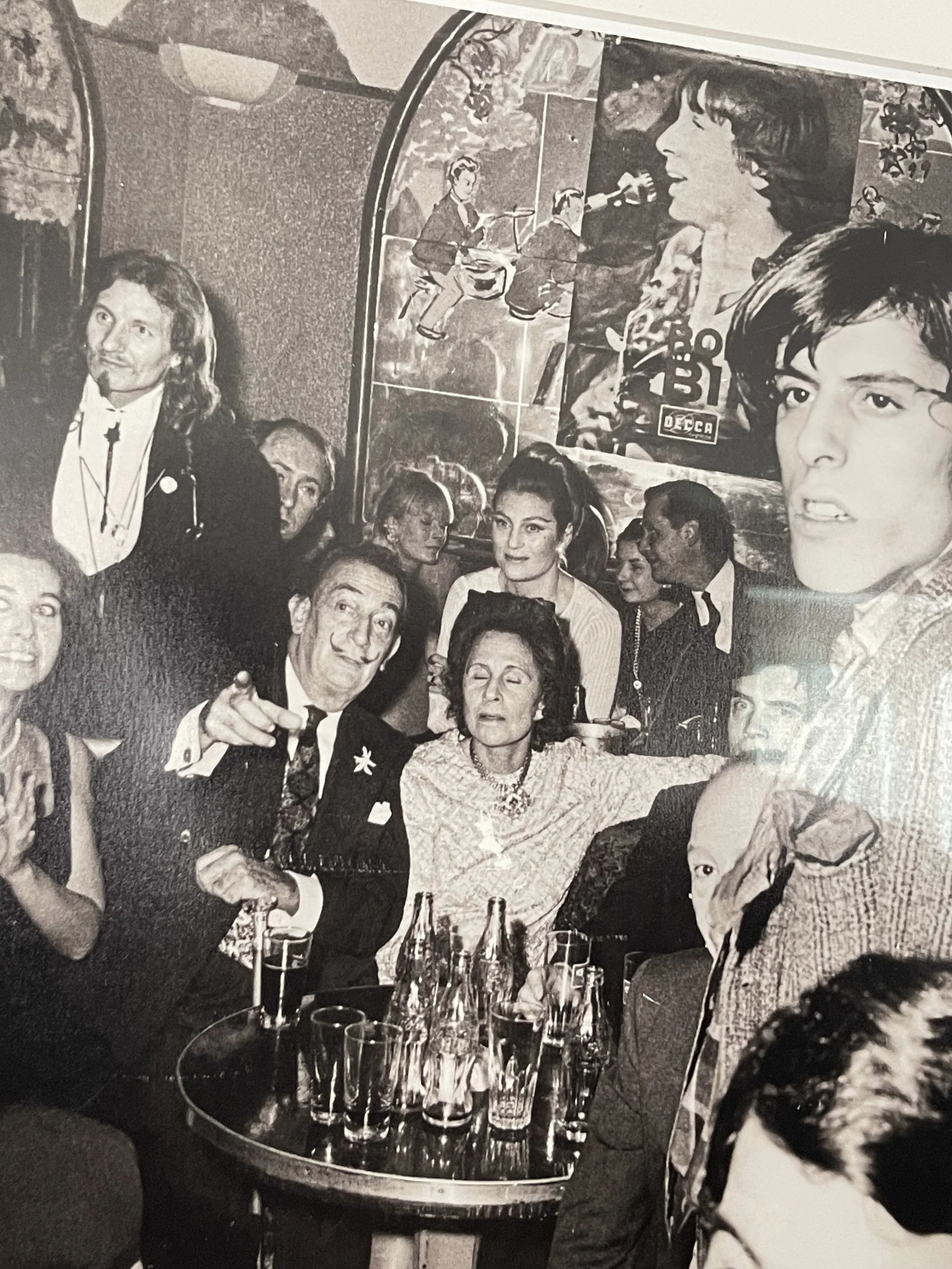
On one side, the rebirth of the Bus Palladium, this ultra contemporary cultural hub carrying the heritage of one of the most legendary clubs in Paris, once famously adored by Salvador Dalí and generations of artists during the 1970s.
On the other side, a completely local Parisian café serving late glasses of wine under neon lights.
And somehow, together, they created the perfect image of Pigalle.
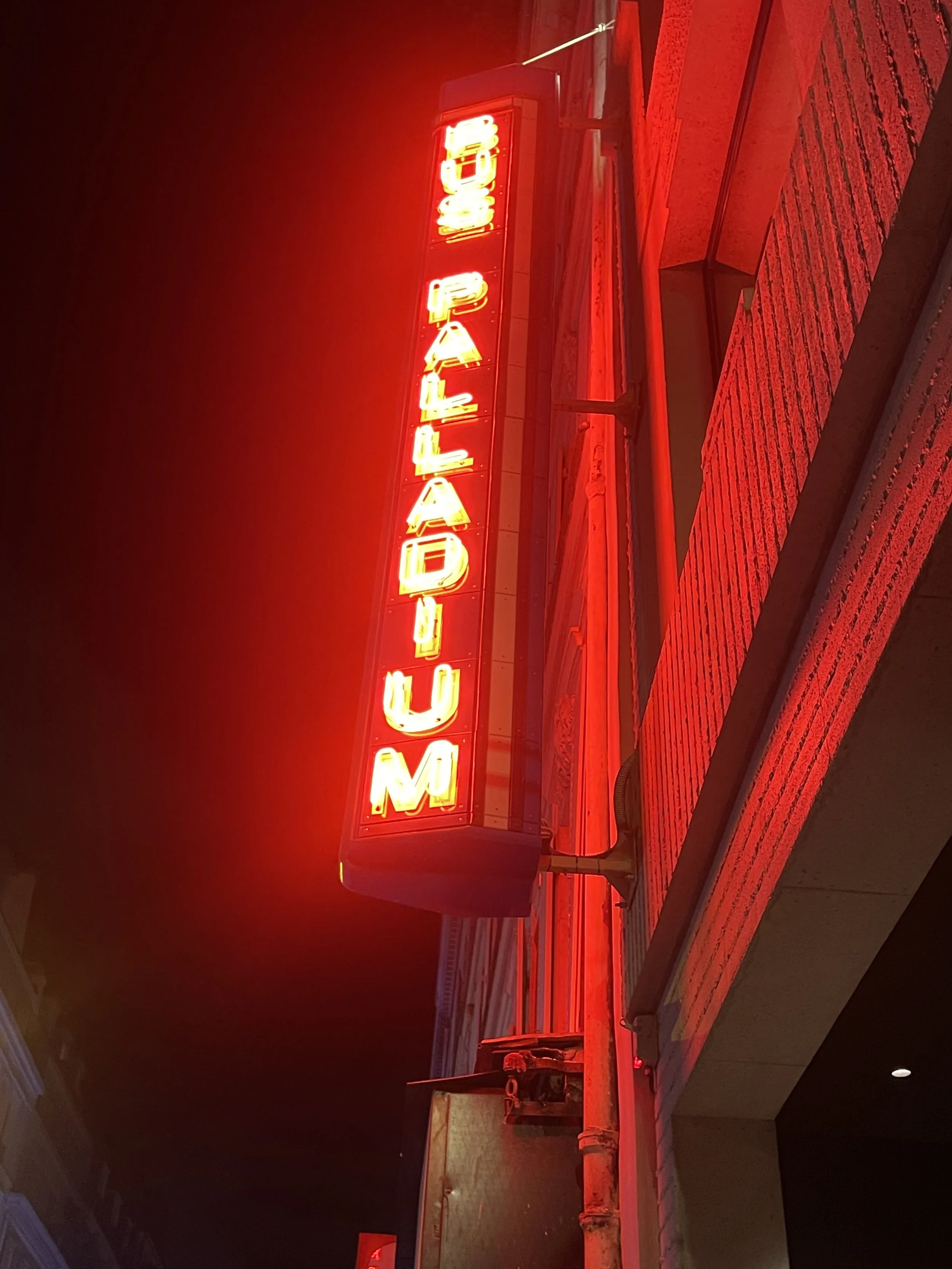
The next morning, we tried not to wake up too late because everyone had told us one thing:
“You have to experience breakfast.”
And honestly, it became one of the greatest hotel breakfasts we have had in Paris in years.
The formal breakfast included with the room was already incredibly generous, but in addition, guests could order beautifully executed à la carte dishes that elevated the whole experience even further.
So naturally, breakfast became brunch. Brunch became coffee. Coffee became conversation.
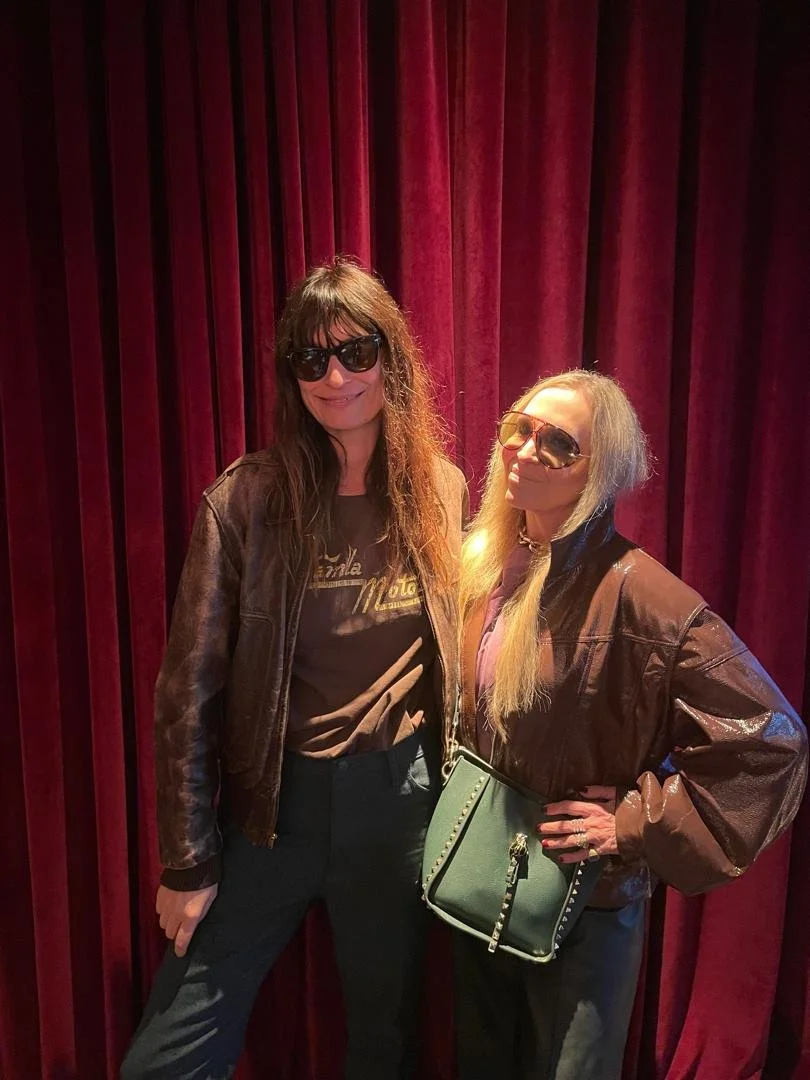
At one point Lionel joined us for coffee, and shortly afterward Caroline de Maigret herself arrived.
He introduced us, and what immediately struck us was how approachable, funny and genuinely rock and roll she was. No attitude. No artificial distance. Just an incredibly charismatic woman who clearly understands instinctively what makes Paris cool.
Later, we also had the opportunity to meet Valentin Brietz, General Manager of the hotel, who generously explained the extraordinary background behind the rebirth of the Bus Palladium: the original institution, the partnership with a new hospitality group, the desire to preserve the spirit of the place while translating it into a contemporary language rather than a nostalgic reconstruction.
That distinction is essential.
The Bus Palladium is not vintage.
It is heritage transformed into something alive.
Valentin then showed us several categories of rooms and suites, including the spectacular Dalí Suite, a place so extraordinary it almost feels unreal, somewhere between a surrealist apartment and a cinematic fantasy.
At that point, after one more coffee and endless conversations, it was time to leave and return to our Paris apartment.
But we left with a realization.
Paris is one of the few cities in the world where you can still experience an entire journey without ever leaving one neighborhood.
And the Bus Palladium may now be one of the best examples of that philosophy.
For 24 hours in Pigalle, you can sleep beautifully, eat extraordinarily well, dance, meet fascinating people, experience culture, nightlife, music and design, all while remaining immersed in the soul of Paris itself.
The Bus Palladium is no longer simply a legendary club.
It has become a complete Parisian experience.
Special thanks to Hortense Desteve, who made this unforgettable invitation and immersive experience possible, as well as Lionel Bensemoun, Caroline de Maigret, chef Valentin Raffali, Valentin Brietz and the entire Bus Palladium and Chapitre Six team for allowing us to discover this extraordinary new chapter of Paris nightlife.
Instagram:
@lionelbensemoun
@hortensedesteve
@carolinedemaigret
@buspalladium.club
@bus_palladium
@valraffali
@chapitresix_hotels